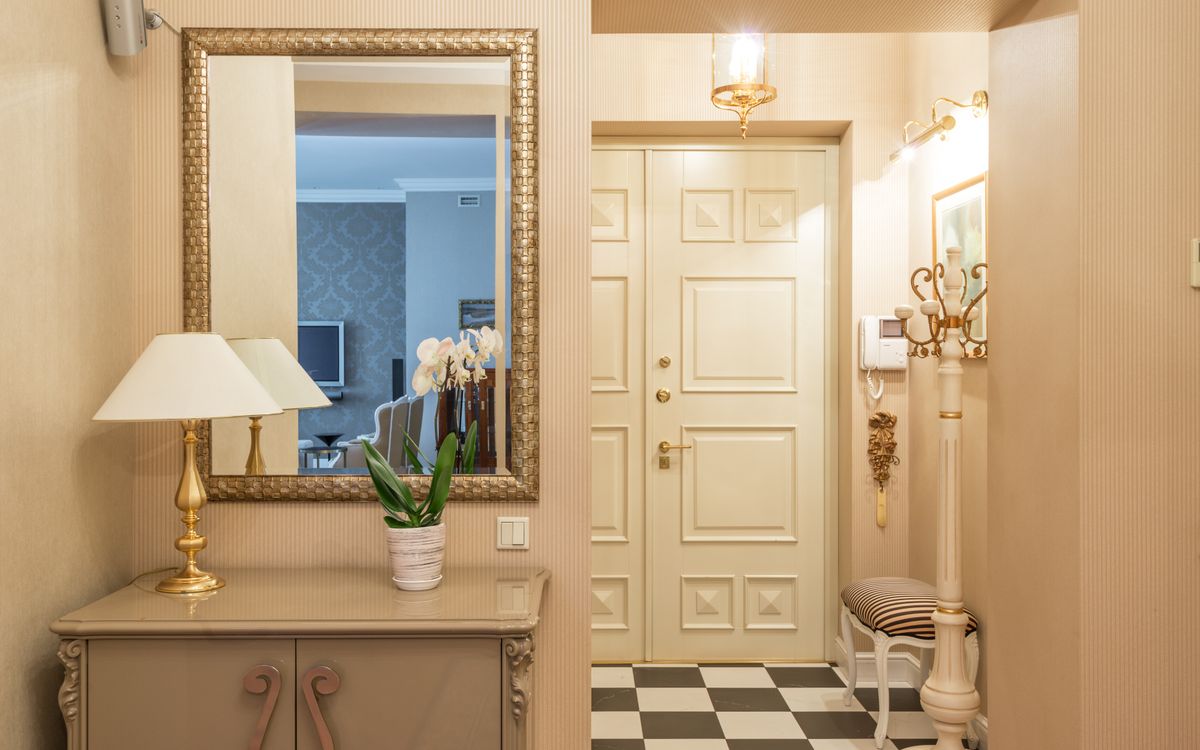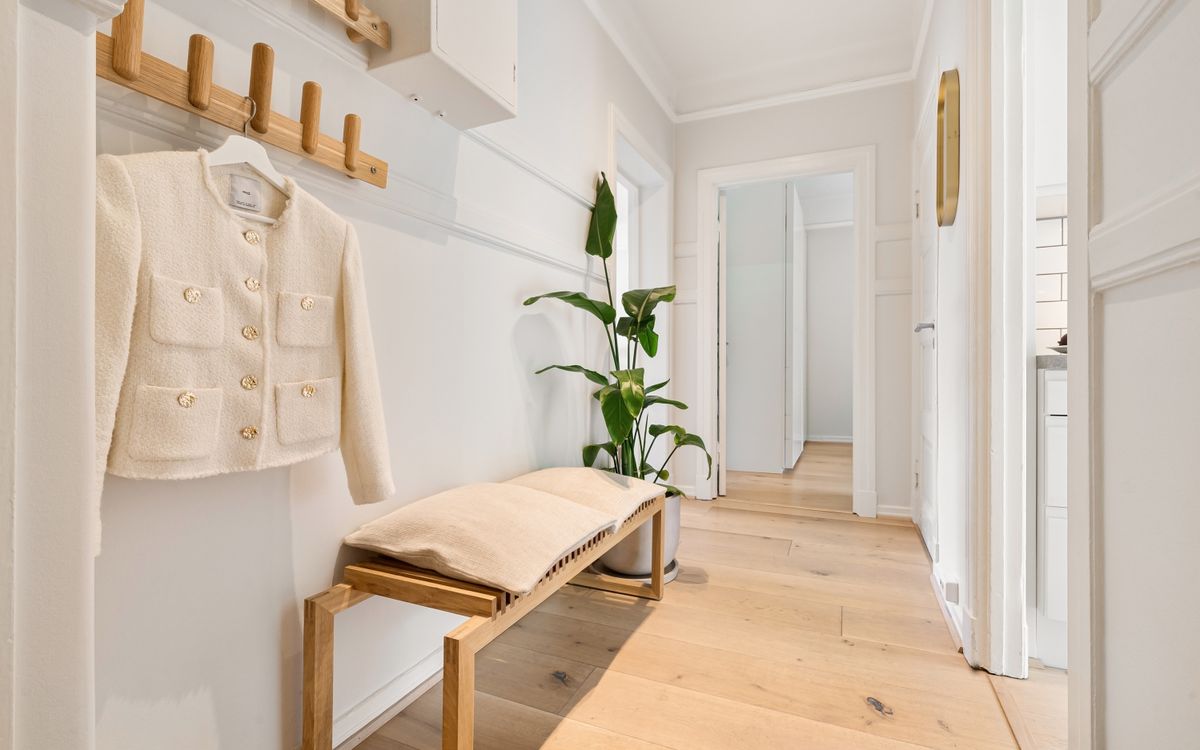
An entryway console has four jobs: hold a lamp or a bowl, hide the keys and the mail, keep the floor clear for shoes, and stand against a wall that has a baseboard on it. Product listings answer none of the four well. They lead with width, then height, then a depth figure that includes the drawer front, the back rail and the air behind the drawer box.
That last number is the one that misleads. Two tables can both be sold as 16 inches deep and give you drawer interiors of 11.1 and 13.5 inches. One of them takes a letter-size folder lying flat and the other does not, and neither listing will tell you which one you are buying.
The three tables below sit between 9.4 and 16 inches of outside depth and between 90 and 140 pounds of published top load. What separates them is not the finish or the width. It is how much of the depth reaches the inside of a drawer, how the frame behaves against a baseboard, and whether a cord can get from the top surface to the floor without being pinched.
Why table depth is the wrong number to shop by
A drawer box is always smaller than the table around it. Take the published outside depth and subtract the drawer front, the back rail of the cabinet or apron, the slide hardware on each side, and the clearance that lets the drawer close without scraping.
On a 16-inch table the loss is usually 2.5 to 5 inches. Simpli Home publishes both figures for its Lowry console, and the gap is 4.9 inches: 16 inches outside, 11.1 inches of drawer interior. On the same brand’s Riverside console the gap is 2.5 inches, with a 13.5-inch interior inside a 16-inch table. Same nominal depth, 2.4 inches of difference in what you can put in the drawer, which is the difference between a magazine fitting flat and not.
Drawer height is the second number nobody lists prominently, and it is the one that decides whether the drawer is a mail drawer or a key drawer. A number 10 envelope is 4.125 by 9.5 inches. A letter-size file folder is 9.5 by 11.75 inches, and it does not bend, so it needs 11.75 inches in one direction or it will not lie flat. A drawer with 3.15 inches of interior height will take a tray of mail standing on edge but not a folder. A drawer with 4 inches will take the folder, and a small stack on top of it.
The practical test, before you buy: take the interior depth the listing gives, subtract 0.25 inch for the glide clearance at the back, and compare the result against 11.75 inches. If it fails, the drawer is for keys, gloves and chargers, and the mail has to live on the top surface or in a wall tray.
Three consoles, and the drawer each one gives you
All three are sold as entryway or sofa consoles and all three are currently listed by the manufacturer. Their frames differ more than their styling suggests: one is a light panel-goods table on a metal frame, one is an oak-veneer top on angled metal legs, and one is solid mango on a black steel frame with an open lower shelf.
VASAGLE 47.2” Narrow Console Table with 3 Drawers (ULNT142KB02S)
The shallow option, and the one that fits a hallway where nothing else will. Outside it is 9.4 inches deep, 47.2 inches wide and 30 inches high, built from particleboard, solid wood and MDF panels, and it weighs 41 pounds. The tabletop is rated to 110 pounds and each drawer to 22 pounds.
VASAGLE does not publish drawer interior dimensions for this model, and that omission is itself the answer. A 9.4-inch table has to house the drawer front, the slides and a back rail in that 9.4 inches. Once those are accounted for, the interior cannot be much more than 7.5 inches deep, which means a 9.5-inch envelope will not lie flat and has to go in at an angle or stand on edge.
There is a specification wrinkle worth knowing before you load it. A closely related model number, ULNT143K41, is listed with an 11 lb drawer rating rather than 22 lb, with the same outside dimensions. Both are light loads in practice, but if the drawer is going to hold a tool roll or a bag of batteries, plan on the lower figure.
What the table does well is the thing a narrow hall needs. At 9.4 inches deep it leaves a walkway in a hallway that cannot take a 16-inch piece, and the open bottom shelf takes a basket of shoes or a pair of boots lying down. The trade is that the top surface is 9.4 inches deep minus whatever gap the baseboard forces, which is not enough for a standard 10-inch mail tray.
Simpli Home Lowry Console Sofa Table (AXCLRY-03-OAK)
The mail drawer. Sixteen inches deep, 60 inches wide, 30 inches high, with 22.9 inches of clearance underneath and a published top load of 140 pounds. The frame is oak veneer on metal, and the whole table weighs 92.6 pounds, which is heavy for something this thin — most of that is the top and the drawer boxes.
The three drawers are 16.38 inches wide, 11.1 inches deep and 3.15 inches high inside. That is a wide, shallow drawer, and it is exactly right for the thing entryway drawers actually hold: envelopes, a checkbook, gloves, a dog lead, sunglasses, a badge on a lanyard. A 9.5-inch envelope fits with 1.6 inches to spare. A magazine at 10.5 inches deep fits with 0.6 inch to spare. A letter folder at 11.75 inches does not fit at all, and no amount of rearranging will change that.
The 22.9-inch clearance under the drawers is the most useful number on the sheet. It takes a 15-inch-tall boot standing upright, a laundry basket, or a robot vacuum, and it means the table is not just a top surface with drawers in it. The baseboard passes under the frame, so the only thing stopping the table from sitting close to the wall is the rear legs meeting the trim.
Simpli Home Riverside Console Sofa Table (3AXCRIV-03)
The deep drawer, and the one that behaves most like a small dresser. Sixteen inches deep, 54.3 inches wide, 32.5 inches high, solid mango on a black metal frame, 70.8 pounds, with a published top load of 90 pounds. The open lower shelf sits 18 inches below the drawer box, according to the retailer’s dimension sheet.
Its drawer interiors are 14.25 inches wide, 13.5 inches deep and 4 inches high. That is 84 percent of the table’s outside depth, the highest usable rate of the three, and it is deep enough to take a letter folder flat with 1.75 inches left over, or a stack of magazines with room for a hand behind them.
Two numbers work against it in an entryway. The 4 inches of floor clearance means the frame cannot straddle a tall baseboard, so the table stands off the wall and the lower shelf is only 4 inches off the floor — too low for shoes to slide under and awkward for a basket. And 4 inches of drawer height, while better than 3.15, still will not take a standing file or a 5-inch desk tray. The 90-pound top rating is the lowest here, which matters if the console is going to hold a lamp, a bowl and a stack of books at once.
The usable rate, and what it tells you
Divide the drawer interior depth by the table’s outside depth and you get a number that is comparable across products, which the raw dimensions are not.
| Model | Outside depth | Drawer interior | Usable rate | Drawer height |
|---|---|---|---|---|
| VASAGLE 47.2” (ULNT142KB02S) | 9.4 in | not published, roughly 7.5 in or less | under 80% | not published |
| Simpli Home Lowry | 16 in | 11.1 in | 69% | 3.15 in |
| Simpli Home Riverside | 16 in | 13.5 in | 84% | 4 in |
Below about 70 percent, the table is deeper than its storage, which is usually a sign of a decorative apron or a thick back rail. That is not automatically bad — the Lowry’s 4.9 inches of loss buys a top that is genuinely 16 inches of usable surface with nothing hanging below it — but it does mean the drawer will not be the place the mail goes.
Volume is the other way to compare, and it is more honest than depth alone. The Lowry drawer works out to 573 cubic inches, about 0.33 cubic foot, or roughly 1 cubic foot across all three drawers. The Riverside drawer is 770 cubic inches, about 0.45 cubic foot, or 1.3 cubic feet across three. That is a third more storage in the same 16 inches of table depth, and it is entirely down to the drawer height and the thinner back rail.
Wires behind a console, and the gap nobody budgets
A console in a hallway usually ends up with a lamp on it, and often a charging cable or a power strip on the lower shelf. That means a cord has to get from the top surface to the floor, behind the table, without being pinched between the frame and the wall.
The baseboard is what makes this work. Because the table cannot sit flush — the trim holds it 1/2 to 3/4 inch off the wall — there is a continuous vertical channel behind the back rail for a cord to drop through. A standard two-prong plug body is about 1.25 inches wide and 0.75 inch thick, so it will pass a 0.75-inch gap if the cord is fed through plug-first from above rather than dragged sideways. A three-prong plug or a grounded adapter will not, and has to go up and over the top.
That changes the choice between these three. The Lowry has an open span of 22.9 inches under the drawer box, so a cord drops straight to the floor with nothing to clip it to and nothing to hide it. The Riverside has a shelf in the way at 18 inches, so a cord has to run down the back of the shelf against the wall, where it is visible from the front. The VASAGLE’s lower shelf is closer to the floor, which shortens the run.
If the cord is the point — a table that exists to charge things by the door — plan on a cord clip at the back edge and a flat plug, and check that the plug does not foul the back rail when the drawer above it is pushed in. A drawer box that extends to within 1 inch of the back panel will clip a cord that runs up the inside face.
Leg clearance and the baseboard problem
Most baseboards are 3.5 to 5.25 inches high and 1/2 to 3/4 inch thick, and many have a quarter round at the floor that adds another 3/4 inch of projection. That is the geometry a console has to negotiate, and the three tables handle it differently.
The Riverside’s 4 inches of floor clearance is the tight case. A 5.25-inch baseboard is taller than the frame’s clearance, so the base cannot go over the trim; the table has to stand in front of it, which costs 0.75 inch of hallway and leaves a visible gap along the wall. The 4-inch clearance also means the lower shelf is low enough that a shoe cannot slide under it and a vacuum head will not either.
The Lowry’s 22.9 inches clears any residential baseboard without contact, and its legs land on the floor in front of the trim. The practical consequence is the same as the Riverside’s, just less visible: the table’s back edge sits about 0.75 inch off the wall, so a 16-inch table gives 15.25 inches of usable top depth, and a 9.4-inch table gives 8.65.
There is a second conflict that shows up in narrow halls: door casing. A 60-inch console needs 60 inches of clear wall, and a door casing typically projects 0.75 to 1 inch into the room on each side of an opening. A wall that measures 62 inches between door frames is a wall that takes a 60-inch table with 1 inch to spare on each side — which is why the 47.2-inch and 54.3-inch widths exist.
The top surface, and how much of it survives
A console top is at 30 to 32.5 inches, which is below eye level and below the comfortable standing reach for anything you want to pick up without looking. That is the right height for a drop zone and the wrong height for display, which is why so many consoles end up holding a lamp and a bowl of nothing.
Depth is the limit here. A 16-inch top with a 0.75-inch wall gap gives 15.25 inches, enough for a 10-inch mail tray plus a lamp base plus a key bowl in a row. A 9.4-inch top gives 8.65 inches, which takes a key bowl and a small tray and nothing else — a 10-inch tray overhangs the front edge, and anything that overhangs gets knocked off.
The lamp is the item that decides this. A table lamp base is usually 5.5 to 7 inches across, and it wants to sit at the back corner so the shade is not in your face when you walk past. On a 9.4-inch table that leaves 2 to 3 inches of usable width in front of the lamp, which is a key bowl and no mail.
Load, stability and what the ratings are for
The published top loads here are 90, 110 and 140 pounds, and none of them is the number that will fail first. A lamp, a bowl, a tray of mail and a pair of gloves come to well under 20 pounds. The failure mode for a console is tipping, not crushing: a 30-inch-tall table that weighs 41 pounds and carries 110 pounds on top is a table a child can pull over by the drawer, and VASAGLE includes an anti-tip kit with the related model for that reason.
Drawer ratings work the same way. Twenty-two pounds per drawer is far more than keys and mail will ever weigh, and the 11-pound figure on the related VASAGLE model is still enough for a drawer of chargers and batteries. Where the rating starts to matter is the junk-drawer drift: a drawer that collects a hammer, a roll of tape and a jar of coins is a drawer that gets pulled open hard, and a 3.15-inch drawer on metal glides will sag at the front before it fails outright.
The other stability number is weight. The Lowry at 92.6 pounds and the Riverside at 70.8 pounds both stay put when a drawer is pulled fully open. A 41-pound table with three drawers open at once is a different proposition, and that is the case for loading the back drawers first and keeping the front ones light.
The shortlist
For mail, keys and a surface that has to hold a lamp and a tray at the same time, the Simpli Home Lowry Console Sofa Table is the one to start with. The 11.1-inch drawer takes an envelope flat, the 3.15-inch height keeps the drawer from becoming a bin, and the 22.9-inch clearance underneath means the floor stays usable.
For a drawer that has to take folders, a stack of magazines or anything the household sorts rather than drops, the Simpli Home Riverside Console Sofa Table is the only one of the three with the depth to do it. Accept the 4-inch floor clearance and the table standing off the wall, and it is the most storage per inch of hallway.
For a hall that cannot take 16 inches of depth at all, the VASAGLE 47.2” Narrow Console Table with 3 Drawers is the workable compromise. Plan on the top surface doing the mail, and on the drawers doing keys, gloves and cables rather than paper.
Whichever you pick, measure two things before ordering: the wall between the door casings, and the gap from the wall to the nearest obstruction in the walking path. If you want to settle what goes in the drawers rather than how deep they are, the key and mail drop zone sets out the minimum layout, and shoe rack capacity covers the floor space under and beside the table. For the depth logic that applies to every shelf in the house, the twelve-inch rule is the place to start.