The under-bed box is a category defined by one dimension. Everything else — capacity, color, lid, wheels — is decided after the box has passed the height test, and most boxes fail it: the common sizes are 6.5 to 7 inches tall, while a platform bed can leave 6 inches and nothing more.
This piece compares three boxes that are sold for the job, all of them in that narrow height band, and works from the numbers that decide whether the box gets used or ends up in a closet with the thing it was bought to store.
Measure the gap, not the bed
The number you need is the clear height from the floor to the lowest structural part of the bed, at the point where the box will pass. That is rarely the side rail you can see.
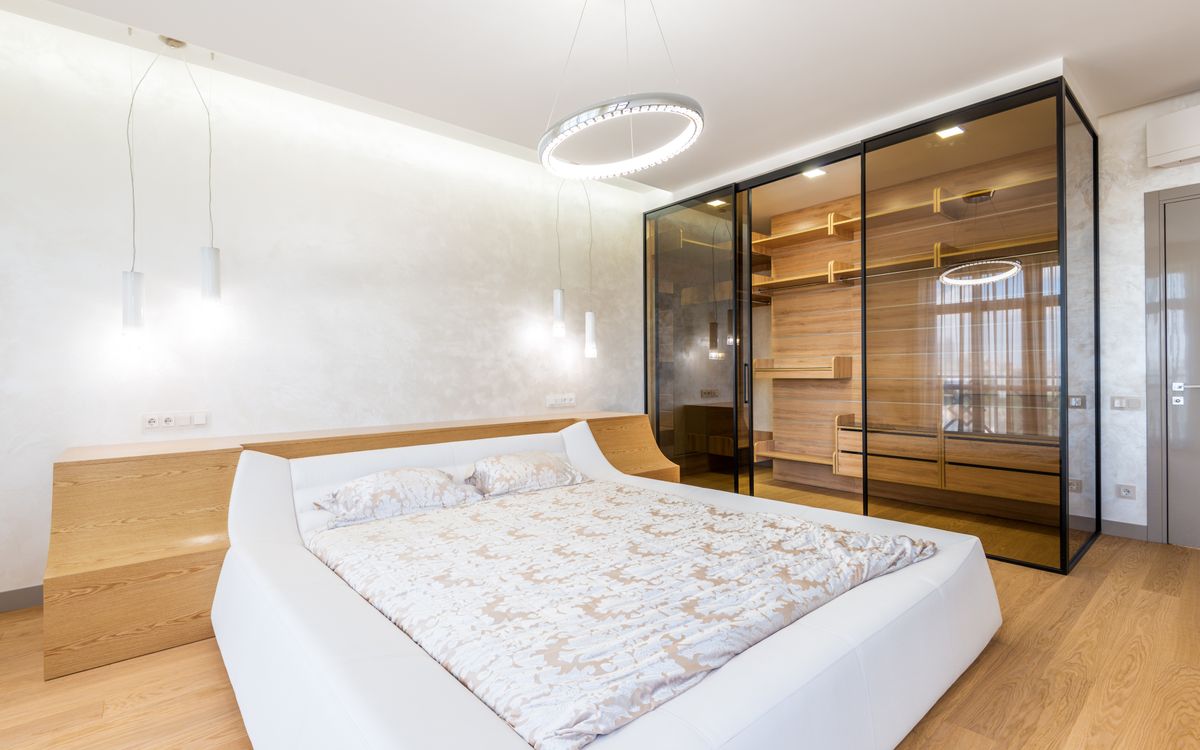
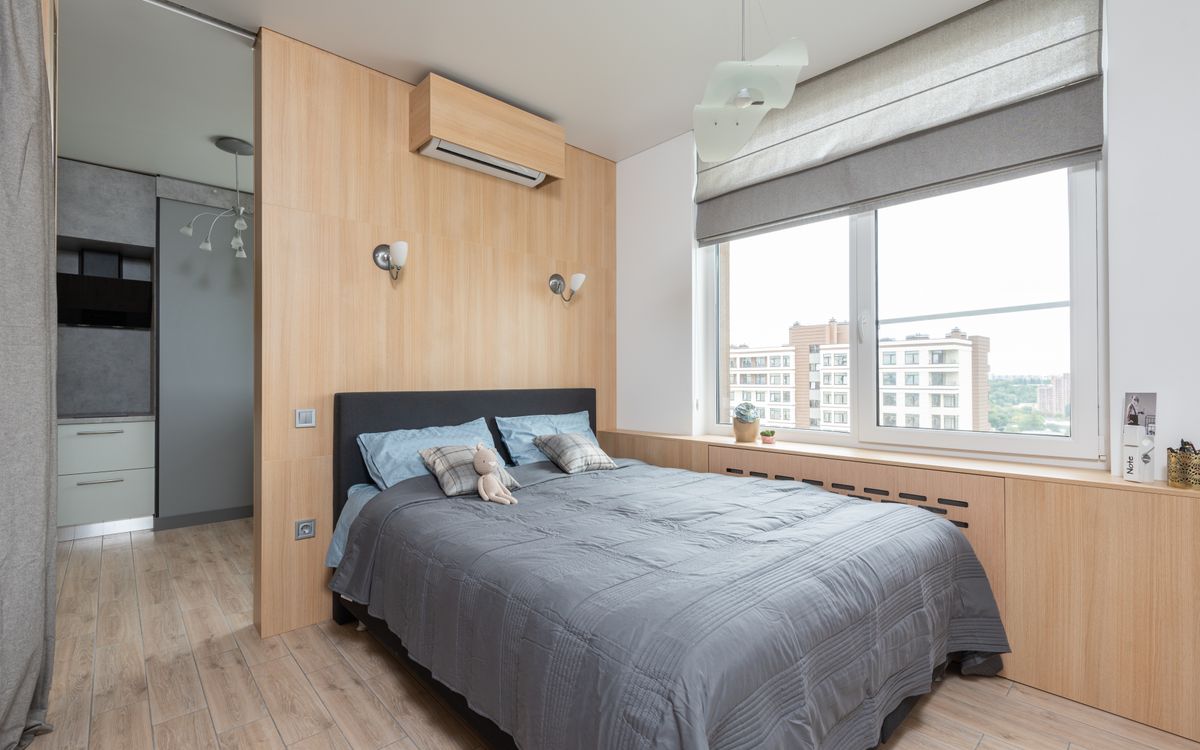
On a platform bed the lowest part is usually the frame or a center support leg, and the center leg is often an inch lower than the rail. On a standard metal frame the side rail sits well above the floor but the center rail and the leg brackets do not, and those are what a box hits halfway in. On an adjustable base the motors and the frame hang below everything.
Take the measurement at three places along the opening: each end and the middle. Use the smallest. Then subtract a quarter inch for the thickness of a rug, because a box that clears by an eighth of an inch on a bare floor will drag on carpet, and dragging is what breaks the casters.
Bed risers are the other variable. A set of 3-inch risers turns a 6-inch gap into 9 inches, which changes the answer completely, but only if the risers are rated for the bed and sit under the legs rather than under the frame rail. A riser that lifts a leg by 3 inches also changes the angle of every joint in the frame, and on a cheap frame that shows up as a squeak within a month.
Height first, length second, wheels third
Once the gap is known, the decision order is fixed.
Height decides whether the box goes under at all. Length decides how far you have to reach. Wheels decide whether you can reach it. That order matters because a box that is too long is a nuisance and a box that is too tall is useless.
Length is the underrated one. A queen bed is 80 inches long and 60 inches wide, and an under-bed box is used from one edge. From a kneeling position, a comfortable one-handed reach is about 24 inches into the gap. A box 43 inches long, pushed in to the far side, has 19 inches of itself beyond that reach — which is fine, because the box slides, and useless, because a box loaded with bedding does not slide on its own.
That is the argument for casters and disks, and it is also the argument for opening access at both ends. A box that can be opened from the end nearest you does not have to be pulled out to be used, which is the difference between storage and a drawer you never open.
| Clear gap under the frame | What fits |
|---|---|
| Under 6.5 in | None of these; a soft bag or a shallow tray only |
| 6.5 to 6.9 in | The two 6.5 and 6.6 in boxes, with under half an inch to spare |
| 7.0 to 7.9 in | All three, with room to slide without scraping the frame |
| 8 in and over | All three, plus a strap or a shallow tray on top |
The three boxes
Sterilite 66 Qt Ultra Storage Box (1995)
The tallest of the three at 7 inches outside, and the one with the most usable interior. Outside it measures 39.5 × 20.25 × 7 inches, and the interior at the bottom is 37.375 × 18.125 × 6.875 inches — a figure worth reading twice, because 6.875 inches of internal height is only an eighth of an inch less than the outside height. Most boxes in this class lose more than that to a lid that sits down inside the rim.
The reason is the lid. It is a center-hinged split lid: two panels, each hinged along the middle of the box, so you can open one half without removing anything or pulling the box out. That is the single most useful feature in the comparison for anyone storing shoes or folded bedding, because it means the box can stay where it is.
It has integrated wheels under one end rather than four casters, and latches with color accents that double as grips. Sterilite also states that the 66 qt and 105 qt boxes share a lid, so a shallow and a deep box stack in the same footprint — useful if the same bed has to hold both.
Two things it does not have. There is no published load rating, and the guidance on the product page is to use judgement and keep the heaviest box at the bottom. And at 39.5 inches long it needs a bed with an opening at least 40 inches wide, which rules out a twin with a footboard.
At around $20 it works out to about 30 cents a quart, which is the lowest cost per quart of any box here with a quoted price.
Rubbermaid 68 Qt Under Bed Wheeled Storage Box (RMUB170000)
The longest of the three at 43.1 × 19.5 × 6.6 inches, and the only one with four proper casters rather than two wheels or four disks. That geometry matters: four casters mean the box stays level when it is half out and loaded, while a two-wheel design tips forward onto its front edge as soon as the center of gravity passes the wheels.
The lid is dual-hinged, opening from either end, which suits a box this long — the end you can reach is the end you open. The body and lid are both clear, so contents are visible without pulling it out, and Rubbermaid makes it in the US.
The listing states no handles, and that is consistent with the design: the grip is the lid edge at either end. With a light load that is fine. With 30 lb of bedding it is not, and the caster frame is what you end up dragging.
At 6.6 inches tall it clears a 6.75-inch gap with a quarter inch to spare. There is no published load rating, and no per-unit price that stays stable, since the box is sold in multi-packs and the figure moves with the pack.
The length is the limitation to check first. Two side by side take 39 of a queen’s 60 inches of width, which fits. On an 80-inch queen the 43.1-inch box leaves 37 inches of bed length, so it has to be pushed close to the far side to be out of the way — and the further it goes, the more of the pull is done blind.
IRIS USA 40 Qt Under Bed Storage Box with Easy Slide Low-friction Disks (500187)
The short one, at 28.5 × 17.8 × 6.5 inches. It gives up 26 quarts to the Sterilite and gains something more useful in a small room: two of them sit abreast in a 60-inch width with 24 inches left over.
The slide is four low-friction disks molded into the base. IRIS’s own description makes the point that the disks add no height, which is the reason to prefer them over casters in a tight gap: a caster needs clearance to turn, a disk does not. On carpet they work well, and on a hard floor they work until dust gets under them, at which point the box skates.
The lid is a snap-on panel with buckle latches at both ends, and the box stacks, which is useful in a closet rather than under a bed. The listing gives outside dimensions only, so the interior has to be assumed from the wall thickness — and boxes in this class lose roughly a quarter inch per side.
It is sold as a three-pack at around $80, which works out to around $27 each. At 40 quarts for $27 it costs more per quart than the Sterilite and holds less, so it earns its place on length and height rather than on value.
What wheels and disks do to the floor
Three different mechanisms, three different behaviors.
Casters are the best on carpet and the worst on a hard floor, because four small hard wheels on a smooth surface have very little contact area and the box runs away from you. They also raise the box, but the published height already includes them, so the height budget is honest.
Moulded wheels under one end are a compromise. They let you lift the other end and roll, which is enough for a box that only moves twice a year and not enough for one that moves weekly.
Low-friction disks are the flattest option and the least forgiving of grit. They slide on carpet because the pile gives them something to compress against, and they slide on tile until a grain of sand welds itself to a disk and scratches the floor in a straight line.
On any floor, the failure that ends a box’s life is a caster snapped off at the mounting boss. That happens when a loaded box is dragged sideways rather than rolled, and it happens most on the long boxes, where the lever is longest.
Dust, humidity and what a latch actually seals
Under a bed is a low-airflow zone. Dust settles there steadily, and the felt pads under a frame collect it in visible drifts. A box with a lid and latch tabs keeps most of that off the contents. What it does not do is seal.
A seal needs a gasket — a rubber or silicone ring compressed by the lid — and none of these three has one. The latches pull the lid down at two points on a box 39 to 43 inches long, which leaves the long sides held by the lid’s own stiffness. That is enough for dust and not enough for humidity.
Humidity is the real risk under a bed, and it is a floor problem rather than a lid problem. A cool floor under a warm mattress is where condensation forms, and a closed box sitting on that floor will hold a slightly higher humidity than the room. Textiles stored for a season in that environment smell of the floor when they come out. A desiccant pack, replaced at each change of season, costs less than the box and solves it.
Clear walls make this visible, which is an argument for clear over opaque in this specific location: you can see condensation on the inside of the lid before it becomes a smell, and you can see the dust film on the lid, which tells you the lid is doing its job.
The posture problem
Nobody mentions this in the product listings, and it decides whether the box gets used.
Loading an under-bed box means kneeling or sitting on the floor, reaching into a gap 7 inches high, and lifting a loaded box that weighs 15 lb when it holds bedding and closer to 40 lb when it holds paper or books. The lift is from floor level with the arms extended, which is the worst position for the lower back and the reason so many of these boxes spend their lives half full.
Three things make it better. A box that opens at the end you can reach, which both the Sterilite and the Rubbermaid do. A box that is light enough to pull with one hand, which favours the IRIS and its 28.5-inch length. And a box that does not have to be lifted at all, which means casters or disks and a floor without a lip.
The best version of the routine is to load the box in place, one category at a time, sitting on the floor with the lid open, rather than packing it elsewhere and sliding a 40 lb weight into a 7-inch slot.
Capacity: what 40 and 68 quarts actually hold
Quart ratings are volume, and the volume is measured inside a shape that tapers. The gap between the rating and the outside envelope is consistent across all three boxes, and it is large.
The Sterilite’s outside envelope is 39.5 × 20.25 × 7 inches, or 5,600 cubic inches, which is 97 quarts. Its rating is 66 quarts, so 68 percent of the envelope is usable. The Rubbermaid’s envelope is 43.1 × 19.5 × 6.6 inches, or 5,547 cubic inches, which is 96 quarts against a 68-quart rating, or 71 percent. The IRIS is 28.5 × 17.8 × 6.5 inches, or 3,297 cubic inches, which is 57 quarts against 40, or 70 percent.
That 70 percent figure is the one to carry to any other box: a quart rating is roughly the outside envelope times 0.7, and the difference is the walls, the taper and the lid.
What the ratings hold in practice depends entirely on what goes in. A 66-quart box takes a queen-size duvet and two pillows, or about 20 folded T-shirts, or four pairs of boots lying on their sides. The same box takes roughly 60 paperbacks, and those 60 books weigh around 40 lb, which is twice what the bedding weighs and more than the box is designed to be dragged around with.
Which box for which bed
For a bed with exactly 7 inches of clearance and a mix of shoes, bedding and off-season clothing, the Sterilite 66 Qt Ultra Storage Box (1995) is the one to start with. It has the most internal height for its outside height, the split lid means it can be used in place, and the shared lid with the 105 qt size makes a second, deeper box possible later without changing the footprint.
For a long, low gap and a load that has to roll, the Rubbermaid 68 Qt Under Bed Wheeled Storage Box (RMUB170000) is the better geometry: four casters keep it level when it is half out, and the dual-hinged lid lets you open whichever end you can reach. It is the longest box here, so measure the opening width before anything else.
For a small bed, a shallow gap, or a room where two boxes have to sit side by side, the IRIS USA 40 Qt Under Bed Storage Box with Easy Slide Low-friction Disks (500187) is the one that fits where the others do not. The 6.5-inch height and 28.5-inch length are the two numbers that earn it, and the price per quart is the price of that fit.
Four measurements before you order
Measure the clear height to the lowest point, at three places, and take the smallest. Measure the width of the opening between the legs or the footboard, because a 39.5-inch box needs 40 inches of clear opening and a footboard can take 6 of them. Measure the depth from the front edge to the wall, so you know whether the box can be pushed clear of the frame or will stop halfway. And measure the floor: carpet adds resistance that a disk handles better than a caster, and a rug adds height that the gap did not have.
If the gap is under 6.5 inches, no rigid box in this class fits and the answer is a soft bag or a bed riser. If it is 6.5 to 6.9 inches, the two shorter boxes are the whole shortlist. If it is 7 inches or more, the choice comes down to length and how you want to move it.
For the storage that surrounds this one, linen closet shelving depth covers the vertical version of the same question, and the twelve-inch rule explains why a box that goes more than 12 inches past your reach stops being storage.